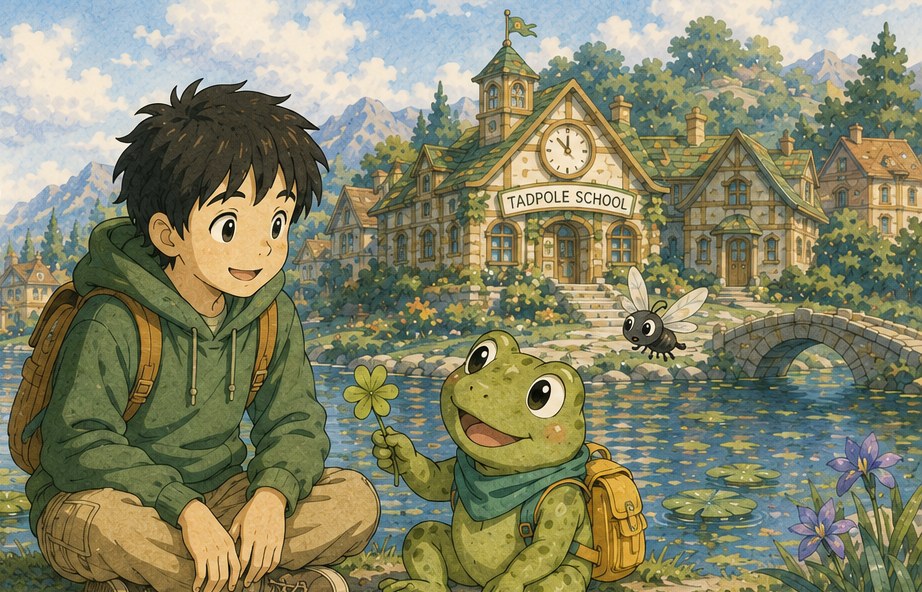
You Can Raise a Bilingual Child — Even If You Only Speak English
If you've ever thought "I'd love for my child to grow up bilingual, but I only speak English" — you are exactly the parent this post is for. Here's the good news researchers and bilingual families keep confirming: you don't have to be fluent to raise a child who loves a second language. You just have to make the words a warm, regular part of daily life.
Let's start with why it's worth the effort, then get practical.
Why an early start matters so much
A young child's brain is wired for language in a way ours simply isn't anymore. Between roughly birth and age three, the brain is in its most flexible stage for picking up sounds — bilingually-exposed babies have been shown to detect a switch between languages as early as six months old.
And the benefits reach well beyond vocabulary. The research is genuinely encouraging:
- A stronger "thinking" brain. Juggling two languages gives the prefrontal cortex a workout, strengthening executive function — the mental toolkit behind focus, flexible thinking, and filtering out distractions.
- More gray matter. Studies from the University of Reading and Georgetown University found more gray matter in bilingual children and adolescents than in monolingual peers of the same age.
- Earlier empathy. Bilingual children as young as three show a head start on perspective-taking and theory of mind — the roots of social and emotional intelligence.
Growing up with two languages can make the brain work harder as it develops — and that extra work pays off in focus, memory, and flexible thinking.
None of this requires a fluent parent. It requires exposure — and that's something you can absolutely provide.
"But I don't speak the language!" — five things that actually work
Some of the most successful bilingual families started from zero and simply learned alongside their kids. Consistency, not fluency, is what makes it stick. Here's how to build that consistency without overwhelming yourself.
1. Pick one phrase and use it everywhere
Don't try to teach a whole language on Monday. Choose a single phrase — "Let's go!", "Are you hungry?", "Time for bed" — and use it in that moment every single day. Once it sticks (and it will, fast), add another. Little and often beats long and rare.
2. Label the house
Put a sticky note on the door (la puerta), the window (la ventana), the fridge. Your child — and you — will absorb these words just by living around them. Bilingual educators call this a "language-rich environment," and it costs about a dollar in sticky notes.
3. Let songs and stories carry the accent
This is the piece nervous parents worry about most: "What if I say it wrong?" You don't have to be the model. Let native-speaker voices do the pronunciation while you provide the cuddles and the routine. Short daily videos, songs, and read-alouds surround your child with the real sounds of the language.
Meet Miss Apple and Froglet
Our story videos pair every new word with an authentic native-speaker voice — so your child hears it said perfectly, every time, while you both sing along.
4. Make it something you hold in your hands
Screens are wonderful, but young children learn deeply through touch, color, and repetition. Coloring the picture of a cat while tracing the word gato, then saying it out loud, hits three senses at once — which is exactly how first words move into long-term memory. Print a few pages, keep them by the crayons, and let learning look like play.
Start with free printables
Grab free coloring and tracing sheets in English, Spanish, and French — no sign-up, just print and play. When your little one's ready for more, the full workbooks are a click away.
5. Learn alongside your child
You are allowed to be a beginner too. When your toddler catches you practicing, you're modeling something priceless: that learning is normal, ongoing, and fun. Say the word wrong, laugh, try again. That's the whole game.
A gentle weekly rhythm to start with
You don't need a curriculum. Try this for two weeks and see how it feels:
- Monday: introduce one new word with a video or a coloring page.
- Through the week: use that word in its real-life moment (mealtimes, getting dressed, bath time).
- Weekend: trace it, color it, and let your child "teach" it back to a grandparent or stuffed animal — teaching is the best kind of review.
Repeat with a new word. In a year, that's fifty-plus words woven into everyday life — a real foundation, built five minutes at a time.
A note on flashcards (and a small tip)
Once your child has a handful of words, simple printable flashcards are a lovely next step for matching games and quick review. If you print your own, a little card stock makes them last through sticky fingers and enthusiastic toddlers. We design ours for standard 8.5×11 perforated card stock with four snap-apart cards per sheet — any brand matching those dimensions works.
The one thing to remember
Your child doesn't need a perfect teacher. They need a present one — someone who makes a second language feel like a normal, joyful part of the day. You can be that person today, in English, with a sticky note and a song.
Start small. Stay consistent. Have fun. The bilingual brain takes care of the rest. 🐸
Bring the words to life 🐸
Every idea here pairs with something on Tadpole School — free to try, friendly on the wallet.
Researched and drafted with AI assistance, reviewed by a human before publishing.